Production in San Dionisio Ocotepec, Oaxaca
Mezcal production is inseparably linked to the place where it is born. Bendito Eres is produced in San Dionisio Ocotepec, a historic area within the Mezcal Denomination of Origin, recognised for its tradition of artisanal palenques and the use of non-industrialised production methods.
Agave maturation and field selection
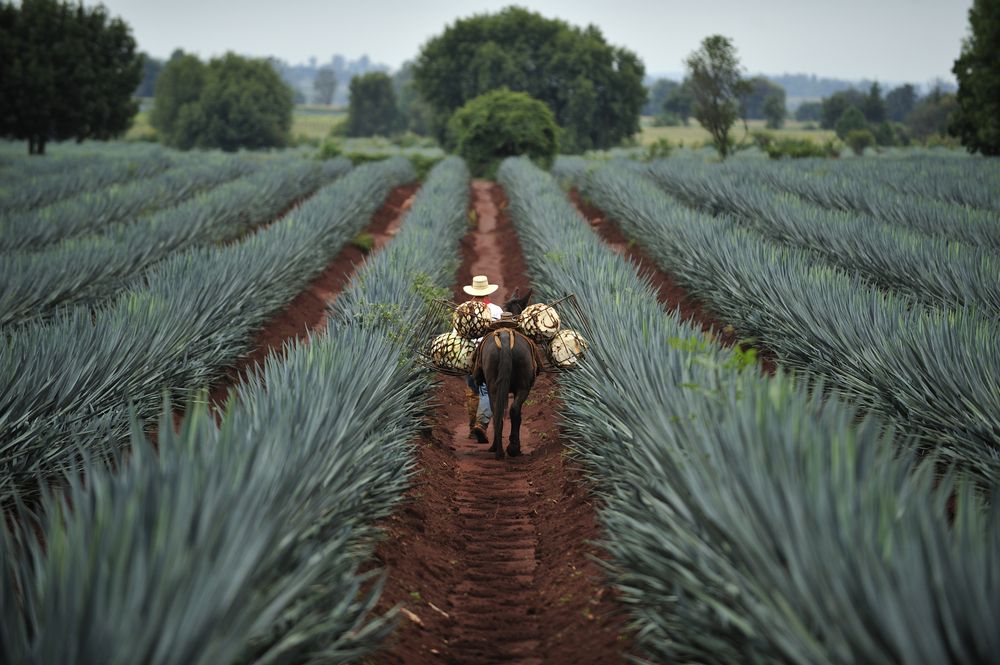
The starting point is mature agave, which can take years to reach optimal development. This waiting period is essential to ensure proper sugar concentration and balanced fermentation, both decisive factors in the final quality of the mezcal.
Agave harvesting and transport to the palenque
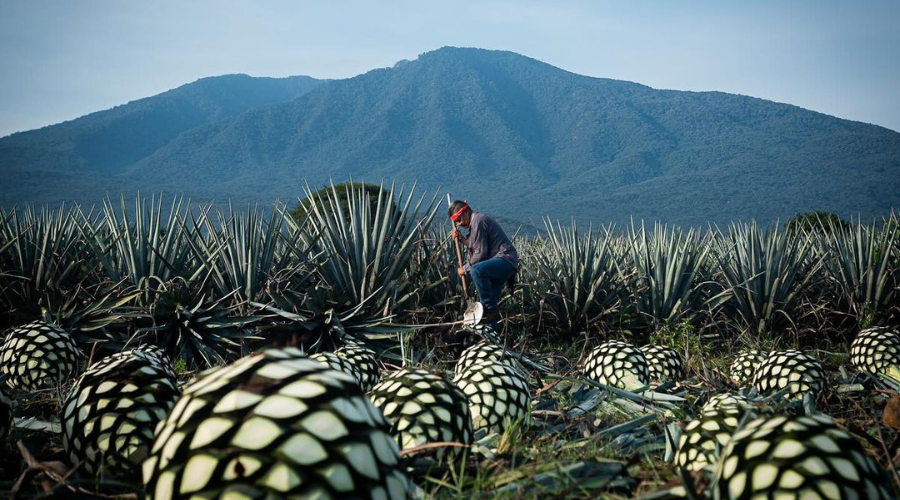
The jimado process makes it possible to obtain the piña by removing the outer leaves. These piñas are transported to the palenque, where the thermal process begins and defines a large part of the distillate’s sensory profile.
Slow cooking in earthen pit ovens
Cooking in traditional volcanic stone ovens is one of the key elements that differentiates mezcal from other agave distillates. The slow heat chemically transforms the agave and creates its characteristic smoky notes, adding aromatic complexity.
Must extraction through milling
Milling with a tahona allows the juices of the cooked agave to be extracted while preserving fibres and aromatic compounds. The resulting must is the base on which fermentation will develop.
Natural fermentation and aromatic development
The must ferments in wooden vessels, without the addition of commercial yeasts. Spontaneous fermentation provides unique nuances, influenced by Oaxaca’s natural environment.
Distillation and definition of the mezcal
The fermented liquid is distilled in copper stills, separating the fractions to obtain a clean, structured and expressive distillate. Distillation defines the mezcal’s final balance.
Resting before bottling
Before being marketed, the mezcal is rested in glass, allowing the flavours to integrate without external interference, preserving the identity of the agave.
The value of origin
The must ferments in wooden vessels, without the addition of commercial yeasts. Spontaneous fermentation provides unique nuances, influenced by Oaxaca’s natural environment.